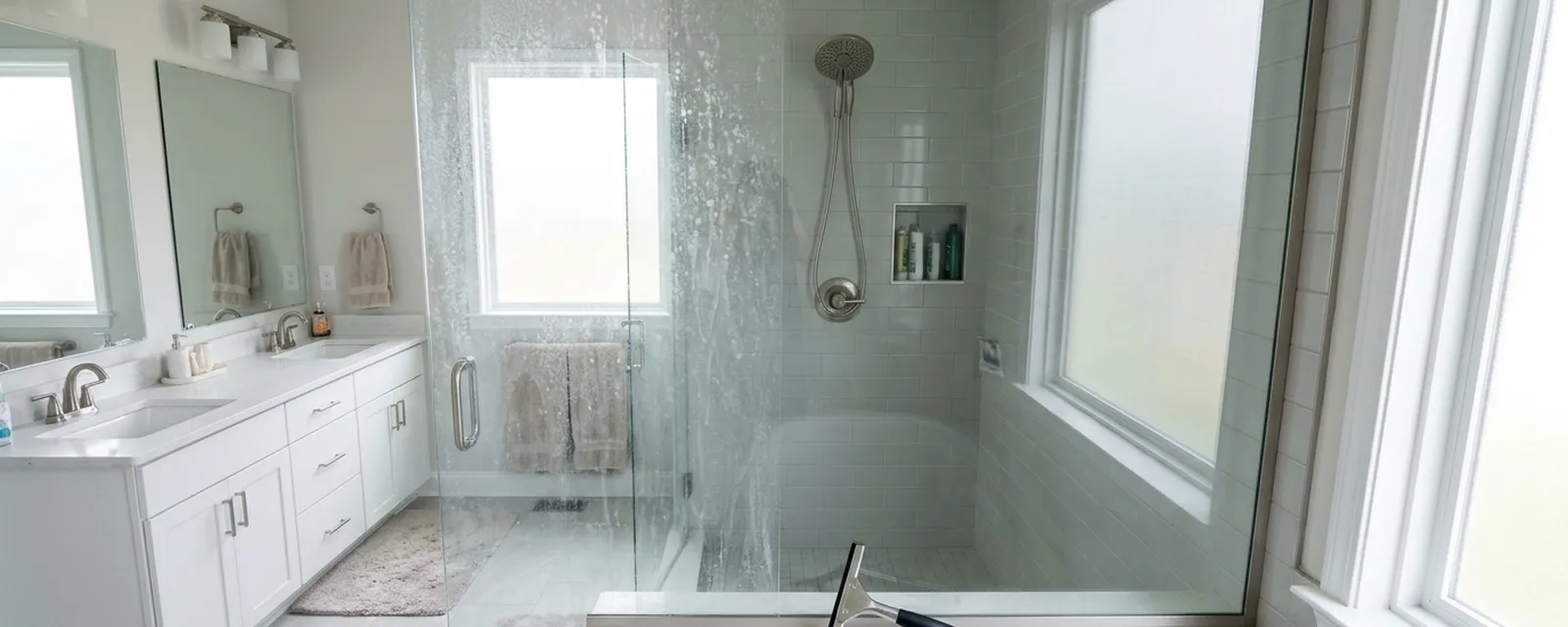
Glass shower doors look best when they're clear, but daily use leaves behind water spots, soap residue, and mineral film. The good news is that keeping glass clean is mostly about routine, not effort. This guide explains what causes the buildup, how to clean it safely, and how to keep it from coming back.
What Causes Cloudy Shower Glass?
Most of the haze on shower glass comes from two sources working together.
Hard Water Minerals
Hard water contains dissolved minerals, mainly calcium and magnesium. When water droplets dry on the glass, the water evaporates and the minerals stay behind as white spots. Over time, those spots layer into a cloudy film that's harder to remove the longer it sits.
Hardness is measured in milligrams per liter (mg/L) of calcium carbonate. The U.S. Geological Survey uses a generally accepted division of water into categories of soft (0–60 mg/L), moderately hard (61–120 mg/L), hard (121–180 mg/L), and very hard (more than 180 mg/L). Your local water utility publishes this information each year: under the Safe Drinking Water Act, your drinking water supplier is required to send you an annual report on the quality of your drinking water, often called a Consumer Confidence Report. If you're on a private well, an inexpensive test kit can tell you your hardness level.
Soap Scum and Body Products
Bar soap, shampoo, conditioner, and body oils also leave residue. When they combine with hard water minerals, they form soap scum, a dull, slightly sticky film that traps more minerals over time.
The Daily Habit That Matters Most
The single most effective way to keep shower glass clear is to remove water before it dries.
Squeegee After Every Shower
A rubber squeegee takes about 30 seconds to use. Work from the top of the glass down, overlapping each stroke slightly, and wipe the blade on a towel between passes. Manufacturers consistently recommend this step. Guardian Glass, for example, notes that a rubber squeegee, sponge or clean cloths may be used to dry the glass, and that the more frequently you clean the glass, the easier the cleaning process will be each time.
Rinse First, Then Dry
If you use a lot of shampoo or body wash, briefly rinse the glass with the showerhead before squeegeeing. This washes off soap residue so it doesn't dry onto the surface. Finish with a microfiber cloth along the edges and bottom if you want a spotless result.
Improve Ventilation
Running the bathroom exhaust fan during and after showers, or leaving the door open, helps the room dry faster. Less lingering moisture means fewer droplets drying slowly on the glass.
How to Clean Glass Shower Doors: Weekly Routine
Even with daily squeegeeing, a light weekly clean keeps buildup from forming.
What You'll Need
- A soft, non-scratch sponge or microfiber cloth
- A mild, non-abrasive glass or bathroom cleaner (or a vinegar-and-water mix)
- A spray bottle
- A squeegee or dry microfiber cloth
Step-by-Step
- Rinse the glass with warm water to loosen surface residue.
- Spray your cleaner across the glass, including the bottom edge where water collects.
- Let it sit for a few minutes so it can break down film.
- Wipe gently with a soft sponge or cloth, using light pressure.
- Rinse thoroughly with clean water so no cleaner residue is left behind.
- Dry completely with a squeegee or microfiber cloth.
Removing Existing Hard Water Stains
If spots and haze have already built up, a mild acid is usually the most effective household option, since it dissolves mineral deposits.
White Vinegar Solution
White vinegar is a common DIY choice. Recommended ratios vary by manufacturer. VIGO's cleaning guide recommends a 50/50 water-and-vinegar solution, rinsed thoroughly. Start with a more diluted mix if you prefer, increase strength if needed, and always check your door manufacturer's care instructions first.
Spray it on, let it sit for several minutes, wipe gently, then rinse and dry. For stubborn buildup, you may need to repeat the process a few times rather than scrub harder.
Protect Surrounding Surfaces
Acids like vinegar can damage some natural stone (such as marble) and certain metal finishes. Keep the solution on the glass, avoid soaking hardware, and rinse nearby surfaces if spray lands on them.
Commercial Hard Water Removers
Products made specifically for shower glass are an option for heavy buildup. Read the label carefully, follow the directions exactly, and confirm the product is safe for your glass, especially if it has a factory-applied protective coating.
What Not to Use on Shower Glass
Many cleaning mistakes cause permanent damage that no cleaner can reverse.
Abrasives and Sharp Tools
Avoid scouring powders, steel wool, abrasive scrub pads, and stiff brushes. Guardian's care guidelines advise users to avoid abrasive cleaners and not use abrasive brushes, razor blades or other sharp objects.
Never Mix Cleaning Products
Never combine vinegar or other acidic cleaners with bleach. The Washington State Department of Health warns that when chlorine bleach is mixed with an acid, chlorine gas is given off, and that even low, short exposures almost always irritate the eyes, throat, and nose and cause coughing and breathing problems. It lists vinegar among common acid products. The same agency notes that many toilet cleaners, glass and window cleaners, drain cleaners, and rust removal products contain acids. Use one product at a time, rinse thoroughly between products, and keep the bathroom ventilated.
Harsh Chemicals on Coated Glass
If your glass has a protective coating, strong or corrosive chemicals may damage it. Follow the coating manufacturer's list of approved cleaners.
Long-Term Prevention Options
Protective Glass Coatings
Some shower glass is treated with a coating designed to make water bead up and resist mineral buildup. These coatings can make cleaning easier, but they don't eliminate it. Guardian states plainly that its coated shower glass is not self-cleaning or a water repelling or a scratch resistant glass. A squeegee and regular cleaning are still needed.
Water Softeners
If your water tests as hard or very hard, a whole-house water softener reduces the minerals that cause spotting throughout the home, not just on the shower glass. Most softeners work by exchanging the calcium and magnesium in the water for sodium. Whether a softener makes sense depends on your water test results, household needs, and maintenance preferences.
Switch Soap Products
Traditional bar soap reacts with hard-water minerals to form soap scum, so some households see less buildup after switching to a liquid body wash. If scum builds up quickly, trying a different product is a simple experiment.
Frequently Asked Questions
How often should I deep clean my shower glass?
With daily squeegeeing, a light clean once a week is enough for most households. Homes with very hard water may need to treat mineral spots more often.
Can I use a razor blade to scrape off buildup?
Glass manufacturers generally advise against it. Blades can scratch tempered glass and damage protective coatings.
Is vinegar safe for shower glass?
Diluted white vinegar is widely recommended for mineral deposits on glass. Keep it off natural stone and sensitive metal finishes, rinse thoroughly, and never mix it with bleach.
Why do my doors look cloudy even after cleaning?
Long-standing mineral buildup may need several treatments to remove. If haze remains after repeated gentle cleaning, the glass may have surface etching or scratches, which cleaning cannot fix.
Does a protective coating mean I don't need to squeegee?
No. Coatings make cleaning easier, but water and minerals still need to be removed regularly.
If you have questions about caring for your shower glass, TruePane Glass is happy to help.
Sources
- U.S. Geological Survey Water Science School, "Hardness of Water": www.usgs.gov
- Guardian Glass, ShowerGuard Care and Cleaning Guidelines: www.guardianglass.com
- VIGO Industries, "How to Clean Glass Shower Doors and Keep Them Clean": vigoindustries.com
- Washington State Department of Health, "Dangers of Mixing Bleach with Cleaners": doh.wa.gov