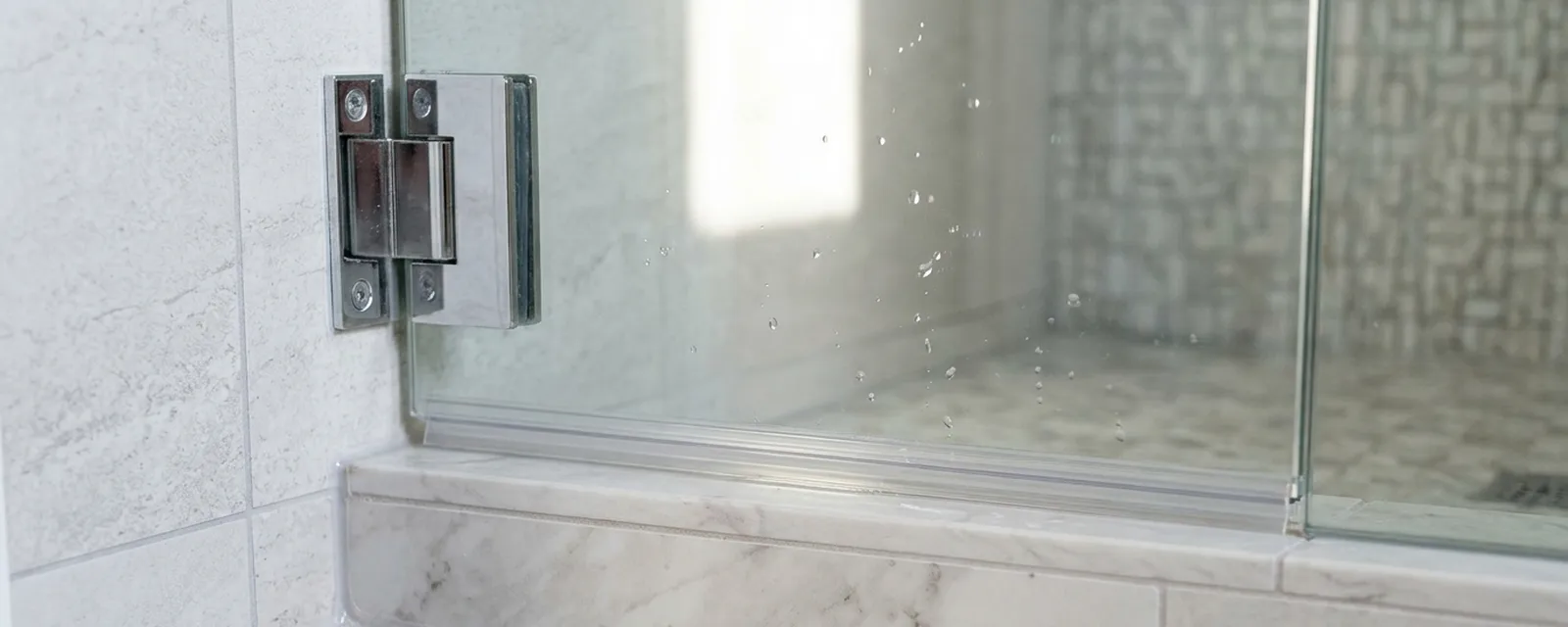
Frameless shower doors are popular for their clean, open look, but many homeowners worry that removing the metal frame means water will end up on the bathroom floor. The honest answer: a frameless door is not a watertight seal the way a submarine hatch is, but a well-designed and properly installed frameless shower should keep water where it belongs during normal use. This guide explains where water can escape, why, and what keeps it contained.
Why Frameless Doors Are Different
A framed door sits inside a continuous metal frame with seals along its edges. A frameless door is a thick panel of tempered glass that swings on hinges, with no frame surrounding it. For the door to open and close freely, there must be small clearances between the glass and the wall, the fixed panel next to it, and the curb or floor below.
Those clearances are the main reason frameless doors behave differently from framed ones. Water doesn't usually "leak" through frameless glass in the sense of a failure. Instead, it can find its way through gaps, especially when spray hits them directly.
Where Water Can Escape
The Bottom of the Door
The gap between the bottom edge of the door and the curb or threshold is the most common trouble spot. Water running down the glass can drip off the bottom and, if nothing redirects it, travel outward. Shower door maker ANZZI notes that if water slips under your threshold, the usual culprit is the tired sweep at the base.
The Hinge Side
Where the door meets the wall or a fixed panel on the hinge side, there's a narrow vertical gap. Water that is sprayed directly at this gap can pass through.
The Strike (Latch) Side
The opposite vertical edge, where the door closes against a wall or panel, also has a small gap so the door can swing without rubbing.
Between Door and Fixed Panels
In enclosures with fixed glass panels beside the door, the joints between panels and door are additional places where water can escape if they're not sealed.
What Keeps Water In
Clear Seals and Sweeps
Frameless doors typically use clear vinyl or polycarbonate seals that clip onto the glass edges. The most important is the bottom sweep, often with a drip rail. One manufacturer's product sheet describes a sweep whose drip rail slopes 45º so the water is drained back into the shower. Side seals and "L" or "H" seals cover vertical gaps between the door and walls or panels. These seals must match the glass thickness and the gap size to work properly.
Correct Curb and Floor Slope
How the shower floor is built matters as much as the glass. The International Residential Code (IRC), a model code many jurisdictions adopt, addresses shower floors in Section P2709.1. It states that where a shower receptor has a finished curb threshold, it shall be not less than 1 inch (25.4 mm) below the sides and back of the receptor; that the curb shall be not less than 2 inches and not more than 9 inches deep, measured from the top of the curb to the top of the drain; and that the finished floor shall slope uniformly toward the drain not less than 1/4 unit vertical in 12 units horizontal (2-percent slope) nor more than 1/2 unit vertical per 12 units horizontal (4-percent slope).
In plain terms: the floor should pitch toward the drain so water runs away from the door. The curb height rules are mainly an overflow safeguard: the official code commentary explains that the curb sits at least 1 inch below the sides and back so that, if the drain clogs, water spills over the threshold rather than over the walls, and the 2-inch minimum above the drain lets water collect visibly before it reaches the threshold. Codes vary by location and edition, so always check the code adopted in your town.
A Sloped Curb Top
Many installers also slope the top of the curb slightly toward the inside of the shower. Water that lands on the curb then runs back in rather than out.
Showerhead Placement
Where the showerhead points makes a big difference. If spray hits the door, its hinges, or its gaps directly, more water will escape. Ideally, the showerhead points away from the door, or toward a fixed panel or solid wall.
Door Size and Layout
Enclosure design affects water containment. A door positioned far from the showerhead, or a walk-in design with a long splash panel, typically keeps the floor drier than a door placed right beside the spray.
Common Causes of Leaks
If your frameless shower starts leaking, it's usually traceable to one of these:
- Worn or damaged sweeps and seals. Vinyl hardens, cracks, or gets torn over time. ANZZI advises that if it feels hard or brittle—or if water beads slip under the edge—the sweep needs replacing.
- Wrong seal size. Seals are sized for specific glass thicknesses and gap widths. A mismatched seal can leave gaps or stop the door from closing.
- Door out of alignment. Hinges can shift slightly with use, widening some gaps. A small adjustment by an installer often fixes this.
- Failed caulk. Silicone where fixed panels or channels meet tile can crack or pull away.
- Floor or curb slope problems. If the floor pitches toward the door, or the curb is level or slopes outward, water will collect where you don't want it. This is a construction issue, not a glass issue.
- Showerhead aimed at the door. Simple to overlook, and simple to check.
How to Check for and Fix Minor Leaks
Find the Source
Run the shower and watch closely. Note whether water escapes at the bottom, sides, or panel joints, and whether it happens with the spray aimed directly at the door.
Inspect Seals
Look for cracks, stiffness, tears, or missing sections. Replacement sweeps and seals are widely available, but they must match your glass thickness and door type. ANZZI's guidance on trimming replacement sweeps is to measure twice before you trim—1/16" matters.
Check Caulk Lines
Look for gaps, cracks, or mildew in the silicone where glass and channels meet tile. Old caulk should be removed completely before new silicone is applied.
Adjust Your Habits
Aim the showerhead away from the door, close the door fully, and squeegee water off the glass and curb after showering.
Call a Professional for Alignment or Slope Issues
Hinge adjustments and curb or floor corrections should be handled by an experienced installer. Heavy glass panels and tile work aren't forgiving DIY projects.
Is a Frameless Door Right for You?
If you love the open look, frameless can work very well, especially when it's planned alongside the shower layout rather than added as an afterthought. If maximum water containment is your top priority, such as in a small bathroom where the showerhead must face the door, a framed or semi-frameless option, or a different layout, may be worth considering.
Frequently Asked Questions
Is some water outside a frameless shower normal?
An occasional drop near the door can happen, especially if spray hits the gaps. Regular puddles usually point to a seal, alignment, or design issue worth investigating.
Can I make a frameless door completely watertight?
Not in the same way as a sealed framed door, because the door needs clearance to swing. Proper seals, sloping, and layout minimize water escape.
How often should I replace shower door seals?
There's no single schedule. Replace them when they become stiff, cracked, discolored, or no longer contact the surface they're meant to seal.
Can a leak damage my bathroom?
Persistent water on the floor can damage flooring, trim, and subfloor over time, so it's worth fixing leaks promptly.
Does a steam shower need different glass?
Steam showers need a fully enclosed design, typically with a transom and tighter seals. Discuss steam requirements with your installer and steam generator manufacturer.
If you have questions about water containment in a frameless shower, TruePane Glass is happy to help.
Sources
- ANZZI, "Leaking Shower? How to Fix the Bottom Seal on a Frameless Glass Shower Door": anzzi.com
- Coastal Shower Doors, Vinyl Replacement Shower Sweep product sheet: images.thdstatic.com
- International Residential Code Section P2709.1, via UpCodes: up.codes
- IRC P2709.1 text and code commentary, as quoted on The Building Code Forum: www.thebuildingcodeforum.com